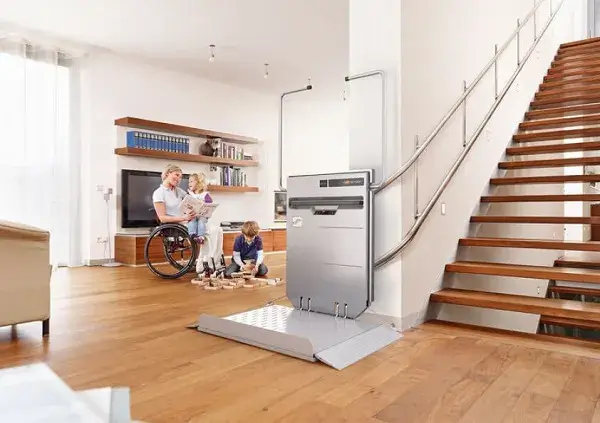
For millions of households, there comes a day when the staircase stops being a simple fact of the home and starts being an obstacle. A bad knee, a heart condition, a recent fall, or just the steady march of time can turn a flight of stairs into the hardest part of the day. When that happens, families face a practical question with real consequences: what’s the best way to keep every floor of the home within reach?
Two solutions dominate the conversation, the stair lift and the residential elevator. Both have their place, but they’re very different products, and understanding the trade-offs helps you make the right call.
A Decision More Families Are Facing
This isn’t a niche issue. As the population ages, agencies like the U.S. Department of Health & Human Services have emphasized supporting older adults to live safely and independently in their own homes, a goal the overwhelming majority of people share. Staying put, often called aging in place, increasingly means adapting the home rather than leaving it, and conquering the stairs is usually the central challenge.
The Case for the Stair Lift
Stair lifts have genuine advantages. They’re typically the cheaper option up front, they install relatively quickly along the staircase, and for someone who can transfer on and off a seat independently, they do the basic job of getting a person upstairs. For many budgets and situations, they’re a reasonable starting point, and it would be unfair to dismiss them.
But they come with limitations. A stair lift carries one seated person and nothing more, it can block a staircase for everyone else, it often requires help getting on and off, and many people find the experience, and the stigma that can come with it, less than dignified.
Why Many Are Choosing a Residential Elevator Instead
Increasingly, families are weighing residential elevators as an option instead of stair lift installations, and the reasons are practical. A modern compact elevator carries two people (some models accommodate three or a wheelchair user), moves between floors faster, tends to run more quietly, and lets the user travel independently at the touch of a button, no help required.
Independence and dignity
That independence is a big part of the appeal. Rather than waiting for a family member to help them on and off a seat, a person simply steps or rolls into the elevator and goes. There’s no blocked staircase, no awkward transfers, and far less of the “medical device” feeling that can chip away at someone’s confidence. For many, that restored sense of normalcy matters as much as the physical access.
Practicality and reliability
Elevators also earn their keep in everyday ways a stair lift can’t. They carry laundry, groceries, luggage, and other awkward loads between floors, sparing everyone in the house a risky climb. And because quality units tend to need less frequent servicing than stair lifts, they can prove more reliable over the long haul, offsetting some of the higher upfront cost.
Cost and installation are, of course, part of the equation. A stair lift generally wins on upfront price, while an elevator is a larger initial investment. But the gap narrows when you look at the whole lifetime picture: a modern shaft-free elevator can often be installed in about a day, needs no major construction, and tends to require less ongoing maintenance. For a household thinking in terms of years rather than months, the elevator’s durability and broader usefulness can change the value calculation considerably.
Weighing Safety and Mobility
Safety should anchor the decision. Falls are a leading cause of injury for older adults, and consumer-health resources like WebMD stress that reducing fall hazards in the home, especially on stairs, is one of the most effective ways to protect independence. Whichever solution removes the most risk for your specific situation is the one worth leaning toward, and for households where transfers are difficult or unsafe, an elevator often wins on that score alone.
Getting Local Help to Decide
You don’t have to figure this out in isolation. Local Area Agencies on Aging, which you can find through USAging, offer guidance and sometimes financial resources for home modifications. Consumer platforms such as AgingCare can also help you compare options and understand what other families in similar situations have chosen. A little research into local support can meaningfully change what’s affordable and practical for you.
The Bottom Line
There’s no universal right answer, only the right answer for your home, your health, and your budget. A stair lift may be the sensible, economical choice for one family, while another is far better served by the independence, speed, and dignity of a residential elevator. Weigh the trade-offs honestly, get a professional assessment of your space, and choose the solution that lets you keep living fully in the home you love.